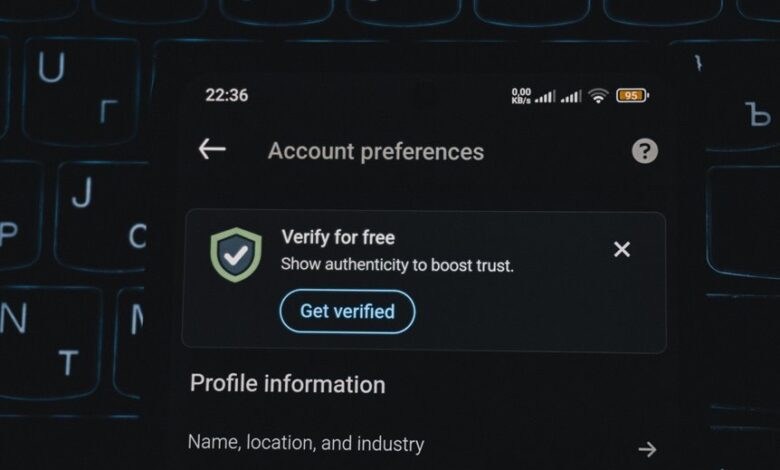
The Social Media ID Trace Node bn6924885p aggregates public cues to surface verified-profile signals across platforms. It examines patterns from account behavior, cross-platform links, and public attestations to assess authenticity. The approach weighs source reliability and filters noise, but raises concerns about consent, privacy, and misuse. Ethical guardrails and governance shape interpretation and limits. The implications for public figures are significant, leaving readers curious about how these signals hold under scrutiny and what safeguards truly protect them.
What Is a Social Media ID Trace Node and bn6924885p?
A Social Media ID Trace Node is a theoretical construct used to illustrate how digital identifiers associated with a user’s online presence can be mapped across platforms, potentially exposing patterns that indicate verified status signals or account trustworthiness; the component labeled bn6924885p appears to function as a placeholder or code reference within this framework, signaling a specific node in a broader tracing architecture. analysis, ethics.
How Verified Signals Are Harvested and Interpreted
How are verified signals harvested and interpreted in practice? Observers note that how signals are gathered follows explicit harvesting protocols, often aggregating public and semi-public cues while filtering noise.


Analysts then interpret patterns against platform norms, highlighting potential authenticity markers. Privacy protocols and governance limits frame data access, yet security implications persist, requiring scrutiny of source reliability and potential misuse risks.
Privacy, Ethics, and Security Implications for Public Figures
Public figures face heightened exposure to privacy breaches, ethical critiques, and security threats as digital footprints expand beyond controlled channels.
The analysis highlights privacy ethics concerns, noting how data aggregation can distort consent and accountability.
Security implications emerge from misused verification signals and profile correlations.
Public figures require transparent governance and robust safeguards to balance freedom with responsible information stewardship and public trust.
Navigating Risk: Evaluating Authenticity and Mitigating Exposure
Navigating risk in the digital public sphere requires a disciplined evaluation of authenticity signals and a proactive strategy to mitigate exposure, especially for high-profile accounts. The analysis emphasizes identifying authenticity, evaluating exposure risk, and measuring credential leakage, while ignoring privacy concerns only at peril. It scrutinizes analyzing engagement metrics, focusing on bot detection, assessing data provenance, and mapping network signals for informed risk mitigation.
Conclusion
The social media ID trace node bn6924885p encapsulates how verified-profile signals are aggregated and assessed across platforms, offering a cautious lens on authenticity patterns. Critics might argue that such tracing invades privacy or overbrands trust in dubious signals; however, disciplined governance and transparent sourcing can mitigate these risks. The analysis underscores the need for ethical safeguards, rigorous validation, and ongoing scrutiny to balance trust construction with responsible handling of high‑profile digital footprints.