Modern commercial towers, mixed-use developments, hotels, and corporate headquarters operate across multiple floors with different departments, tenants, and security levels. In such environments, managing who can access which area and at what time is critical. This is why smart card access control systems continue to remain one of the most reliable and scalable technologies for multi-level buildings.
From encrypted credentials and zone-based permissions to centralized management platforms, smart card systems offer structured, data-driven security that mechanical keys or standalone devices simply cannot provide.
The Complexity of Multi-Level Building Security
Multi-level buildings face unique operational challenges:


- Shared lobbies and common areas
- Restricted executive or data center floors
- Tenant-specific zones in shared office towers
- Elevator access restrictions
- Parking and perimeter access control
In such facilities, relying on traditional keys leads to major vulnerabilities. Lost keys, unauthorized duplication, and the absence of access logs create blind spots in security.
A structured access control system addresses these issues by digitizing identity verification and restricting access based on predefined policies.
Encrypted Credentials: Strengthening Identity Security
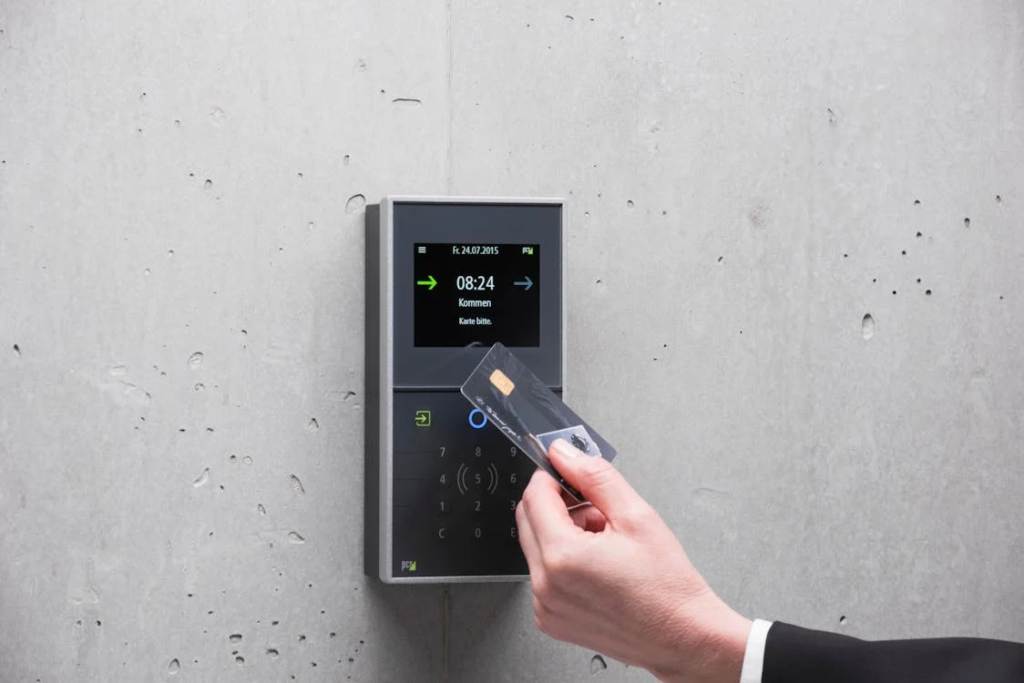
Smart cards used in modern building access control systems are not simple magnetic cards. Today’s systems use encrypted RFID or proximity-based credentials with advanced cryptographic protocols.
Why Encryption Matters
- Prevents Card Cloning: Basic RFID cards can be cloned using low-cost devices. Encrypted smart cards significantly reduce this risk.
- Protects User Identity Data: Personal information stored in the credential is secured through encryption.
- Secure Communication: Data transmitted between the card reader and controller is encrypted to prevent interception.
In multi-level buildings, especially those housing financial institutions, government offices, or corporate headquarters, data protection is not optional. Encrypted credentials add a foundational layer of cybersecurity to physical access.
Zone-Based Permissions for Floor-Level Security
One of the biggest advantages of a smart card access control system is granular permission control.
What Are Zone Permissions?
Zone permissions allow administrators to define:
- Which floors an employee can access
- Time-based restrictions (e.g., 9 AM–6 PM access)
- Department-level access rules
- Temporary visitor access
For example:
- HR staff may access floors 2 and 3.
- IT personnel may access server rooms on floor 10.
- Executives may have unrestricted access.
- Visitors may be restricted to the reception and meeting areas only.
This structured control is impossible with mechanical keys and inefficient with standalone biometric devices.
Centralized Access Management Across Floors
In large towers and multi-tenant buildings, centralized management is critical.
A professionally deployed door access control system allows:
- Real-time monitoring of entry and exit logs
- Instant revocation of lost or stolen cards
- Policy updates without physical intervention
- Integration with elevators and parking gates
- Automated reporting for audits
Security administrators can manage hundreds or thousands of users through a unified dashboard. If an employee resigns, access can be revoked instantly across all floors, entrances, and secured zones.
Audit Trails and Compliance
Regulatory compliance is becoming stricter in sectors such as banking, healthcare, and data management.
A centralized access control system generates:
- Access event logs (who, when, where)
- Denied access reports
- Abnormal activity alerts
- Mustering reports during emergenciIf you are planning to upgrade or implement a smart card access control system in aes
These logs support internal investigations, safety audits, and regulatory inspections.
In case of emergencies, administrators can instantly view who is inside the building, an essential feature in fire evacuation scenarios.
Scalability for Growing Organizations
Multi-level buildings often evolve. New tenants move in. Departments expand. Security policies change.
Scalable door access control systems for business allow organizations to:
- Add new card readers and controllers
- Integrate additional floors
- Expand to new branches
- Upgrade credentials without replacing infrastructure
Cloud-ready platforms also allow hybrid deployment models, reducing on-premise infrastructure dependency while maintaining secure data control.
Enhanced Operational Efficiency
Beyond security, smart card systems improve operational workflows:
- Reduced administrative workload compared to key management
- Faster onboarding and offboarding processes
- Seamless visitor management integration
- Automated time-based rules
Reduced Risk Compared to Traditional Keys
Mechanical keys present several risks:
- No audit capability
- Expensive rekeying after loss
- Unauthorized duplication
- Lack of time-based control
Smart card systems eliminate these vulnerabilities by allowing instant deactivation and policy-based authentication.
Why Smart Card Systems Remain Relevant Despite Biometrics
While biometric solutions such as fingerprint and facial recognition technologies are growing, smart cards remain essential because they:
- Offer cost-effective scalability
- Provide fast authentication in high-traffic areas
- Minimize privacy concerns
- Allow flexible delegation and revocation
In many multi-level environments, smart cards work alongside biometric layers rather than being replaced by them.
If you are planning to upgrade or implement a smart card access control system in a multi-level building, ACIX Middle East offers complete design, supply, installation, and maintenance support across the UAE and GCC. As a trusted Matrix access control supplier, ACIX delivers advanced door access control systems and time attendance system in UAE. Whether you require structured floor-level permissions, integration with security gate barriers, or centralized monitoring, our expert team ensures secure deployment tailored to your operational needs.
Contact ACIX Middle East today to discuss your project requirements.
About the Author
Engr. Daniel Kareem is a physical security systems specialist with over 12 years of experience in access control and building security infrastructure across the GCC. He writes on integrated security technologies and enterprise-grade access management solutions.