
Facility security is no longer defined by static rules or manual monitoring. As environments grow busier and more complex, organizations must understand how people actually behave inside their spaces across commercial, industrial, and public facilities in Qatar. Behavioral analytics transforms raw access data into meaningful insights, allowing security systems to anticipate risk, optimize movement, and support informed decision making across offices, industrial sites, and public facilities using physical access control systems.
Let’s explore how behavioral data is reshaping access control and enabling smarter, faster security decisions.
What Is Behavioral Analytics in Access Control?
Behavioral analytics refers to the analysis of access patterns, movement frequency, time-based activity, and behavioral anomalies within secured environments managed through door access control systems. Instead of reacting to incidents after they occur, modern systems learn what “normal” behavior looks like and flag deviations in real time.


When embedded into a people access control system, analytics shift security from reactive enforcement to proactive intelligence, strengthening protection without disrupting daily operations.
Why Is Behavior More Valuable Than Credentials Alone?
Traditional access control focuses on credentials such as cards, PINs, or fingerprints. While essential, credentials alone cannot explain intent. Behavioral analytics adds context by identifying unusual access times, repeated failed attempts, or unexpected movement paths.
According to a data breach report, compromised credentials remain one of the most common attack vectors, making behavior-based detection critical for modern security strategies.
How Do Analytics Improve Decision Making in Offices?

In corporate offices, analytics help security teams understand daily patterns across departments and floors. For example, if an employee with valid credentials attempts access to restricted zones outside normal working hours, the system can trigger alerts automatically.
When integrated with a smart card access control system, behavioral insights reduce false alarms while improving responsiveness and supporting biometric time attendance correlation. These systems also support space optimization by revealing underused or overcrowded areas.
How Are Industrial Facilities Using Behavioral Data?
Industrial environments face unique risks due to machinery, hazardous zones, and strict compliance requirements. Behavioral analytics monitors how workers interact with sensitive areas, ensuring access aligns with assigned roles. For instance, if a contractor repeatedly approaches a restricted production zone without authorization, security teams receive immediate notifications.
Integrated with a fingerprint access system, identity verification and behavior monitoring work together to prevent accidents and unauthorized entry.
What Role Does Behavioral Analytics Play in Public Spaces?
Public venues such as transportation hubs, hospitals, and government buildings rely on analytics to manage high traffic volumes. Movement patterns help identify congestion, loitering, or abnormal flow near critical access points.
A building access control system in Qatar enhanced with analytics enables automated responses, such as temporarily restricting entry or redirecting foot traffic. These insights support safety planning without compromising accessibility.
How Do Biometrics Enhance Behavioral Accuracy?
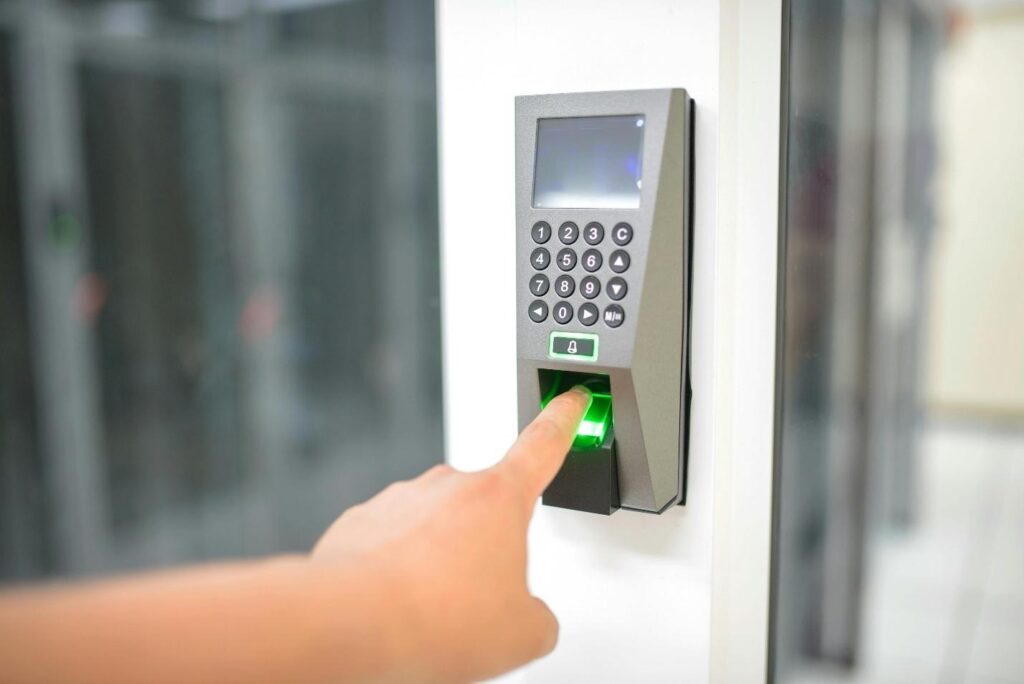
A biometric access control system strengthens analytics by ensuring behavioral data is tied to verified identity rather than shared credentials such as swipe cards or PINs. Biometrics eliminate uncertainty caused by card sharing or lost badges.
When biometric checkpoints feed data into behavioral models, systems gain higher accuracy in detecting anomalies. This layered approach improves trust in alerts and reduces unnecessary interventions while protecting sensitive facilities.
How Does Analytics Support Risk Prediction?
Predictive capabilities are among the strongest advantages of behavioral analytics. By analyzing historical data, systems identify trends that precede incidents, such as repeated access attempts near shift changes or unusual activity during holidays.
Practical Examples of Behavioral Analytics in Action
One example involves an office campus where analytics detect repeated late-night access attempts by an employee on a different floor than usual, triggering review before escalation.
Another example includes an industrial site where movement data reveals unsafe shortcuts taken near restricted equipment, prompting corrective access controls. In public facilities, analytics identify congestion near emergency exits, allowing administrators to redesign access flow for safety improvements.
FAQs
Does behavioral analytics replace traditional access control?
No, it enhances existing systems by adding intelligence and context.
Can analytics work without storing personal data?
Yes, systems analyze behavior patterns while respecting privacy standards.
Is behavioral analytics suitable for small facilities?
Yes, scalable platforms support organizations of all sizes.
Do analytics increase system complexity?
No, centralized dashboards often simplify security management.
Make Smarter Security Decisions with Adax Business Systems
Adax Business Systems delivers intelligent solutions that convert access data into actionable insight through advanced security access control system design tailored for organization in Qatar. By combining behavioral analytics with a robust biometric access control system, Adax helps organizations anticipate risk and manage facilities proactively.
As a trusted Matrix Argo face recognition system supplier in Qatar, the company supports integrated identity verification, employee attendance management system alignment, and secure key management solution deployment.
Contact them today to implement behavior-driven access control solutions built for modern, high-traffic environments.
About the Author
The author is a technology expert focused on access control, security analytics, and facility risk management, translating complex security concepts into practical guidance for organizations managing modern, high-traffic environments.